BPC-157 vs TB-500: two unrelated peptides, compared
Updated

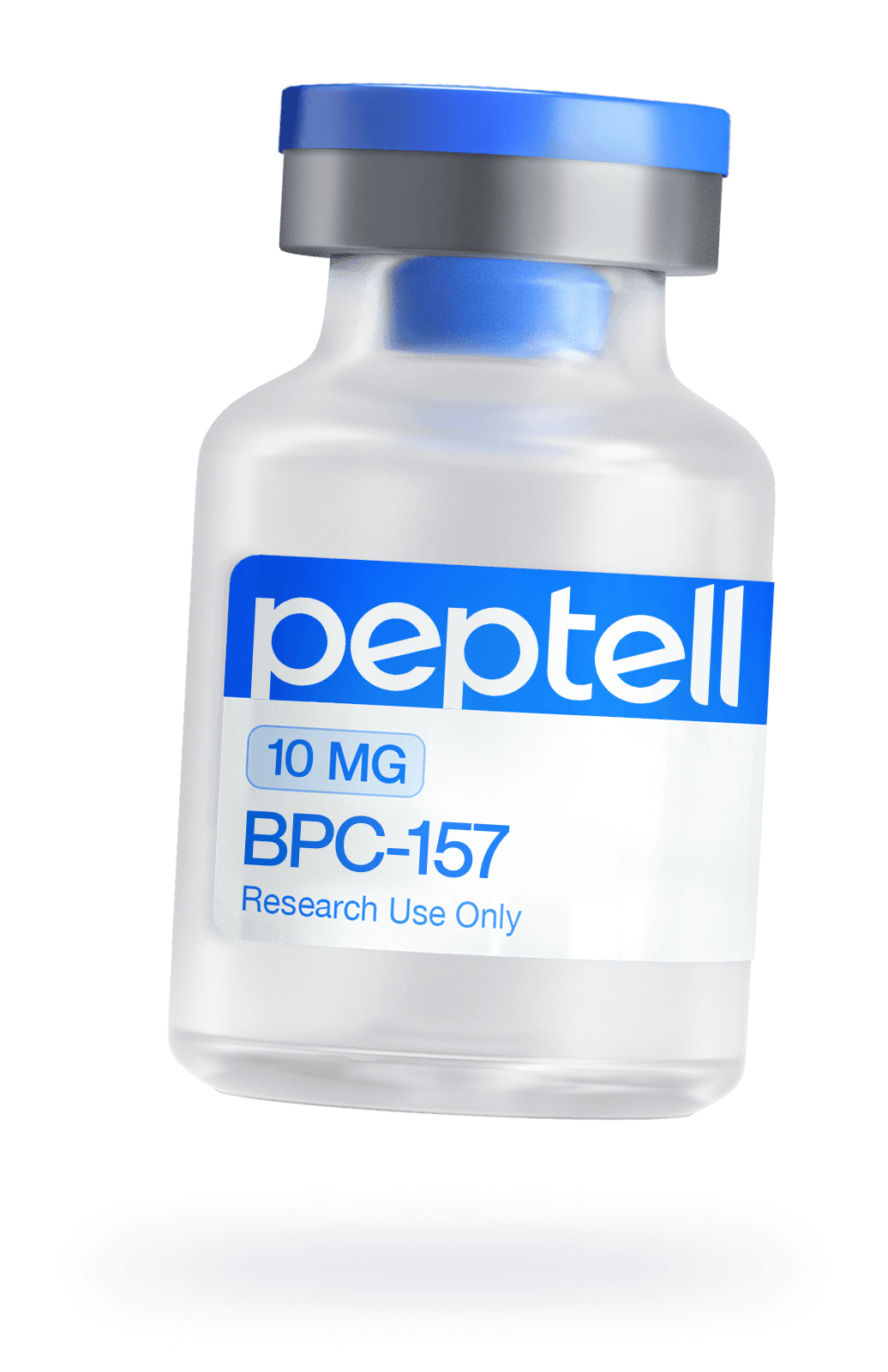
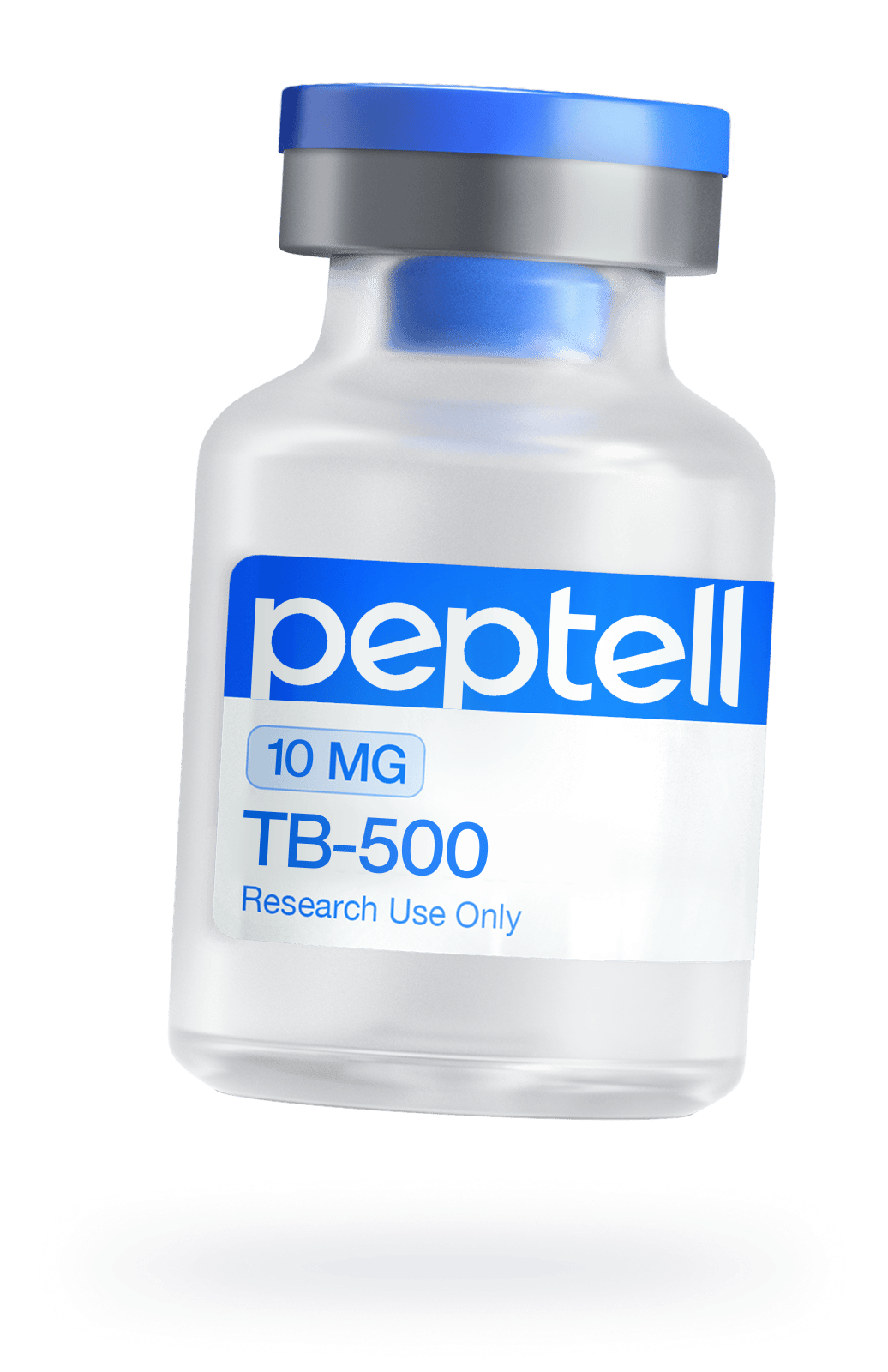
BPC-157 and TB-500 are often named in the same breath. A 2026 orthopaedic review, for example, discussed BPC-157, thymosin beta-4 and TB-500 together [1]. Chemically, they have almost nothing in common. This structural comparison of BPC-157 vs TB-500 sets out their sequences, sizes and origins, what each means for a certificate, and why a vial that contains both needs a separate line for each.
Side by side
| Property | BPC-157 | TB-500 |
|---|---|---|
| Sequence | GEPPPGKPADDAGLV [2] | Ac-LKKTETQ [3] |
| Length | 15 residues [2] | 7 residues [3] |
| N-terminus | Free amine [4] | Acetylated [3] |
| C-terminus | Free acid [4] | Free acid [5] |
| Formula | C62H98N16O22 [4] | C38H68N10O14 [5] |
| Monoisotopic mass | 1418.70 [4] | 888.49 [5] |
| Average molecular weight | 1419.5 [4] | 889.0 [5] |
| Acidic side chains | 3: one Glu, two Asp [2] | 1: one Glu [3] |
| Basic groups | N-terminal amine and one Lys [2, 6] | Two Lys [3, 6] |
| Prolines | 4 [2] | None [3] |
| Reported origin | A partial sequence of a protein, BPC, described from gastric juice [7] | Residues 17 to 23 of thymosin beta-4 [3] |
The two sequences share no stretch of two or more residues [2, 3], and their masses differ by more than 500 Da [4, 5]. They also come from unrelated sources. BPC-157 is described as a fragment of a gastric-juice protein named body protection compound [7]. TB-500 is an acetylated copy of residues 17 to 23 of thymosin beta-4, a stretch containing its central actin-binding domain [3, 8], a 43-residue protein encoded by the TMSB4X gene [9].
What the structures mean in the lab
Charge and counterions. Basic amino-acid groups, meaning the N-terminal amine and the side chains of lysine, arginine and histidine, are the sites that pair with counterions [6]. BPC-157 has two such sites and four acidic groups counting its C-terminus [2, 6], so it is a net acidic peptide. TB-500 has its N-terminus capped by acetylation, which leaves its two lysines as the basic sites, balanced by one glutamate and the C-terminal carboxyl [3, 6]. The number of basic sites sets how much counterion weight each powder can carry.
Degradation sites. Neither peptide contains methionine, cysteine, histidine, tryptophan or tyrosine, the residues most susceptible to oxidation [2, 3, 10]. They differ on aspartate. BPC-157 has an Asp-Asp pair at positions 10 and 11 [2]. Asp-Asp is among the motifs prone to aspartimide formation during Fmoc synthesis [11], and aspartate residues can isomerise and racemise into same-mass products [12]. TB-500 has no aspartate or asparagine [3].
UV response. Neither has an aromatic residue [2, 3]. Proline inside a chain absorbs about three times more strongly than a peptide bond at 214 nm [13], so BPC-157, with four internal prolines and 14 peptide bonds, gives a stronger UV signal per molecule than TB-500. One cannot stand in as a calibration reference for the other.
Breakdown products. For TB-500, an analytical study that incubated the peptide with serum and in-vitro enzyme systems identified shorter acetylated fragments, including Ac-LK and Ac-LKK, among its breakdown products [14]. In a cell-culture experiment, those fragments would appear in an LC-MS trace at masses well below the parent peptide, so knowing them helps when a supernatant is analysed.
Identity. Each certificate should report its own expected mass: 1418.70 or 1419.5 for BPC-157 [4], and 888.49 or 889.0 for TB-500 [5]. For TB-500, the acetyl group matters: the same seven residues without it weigh 42 Da less, and the non-acetylated peptide is a different PubChem record [5, 15]. TB-500 and thymosin beta-4 covers that distinction and the full-length protein.
Why our blend lists each one separately
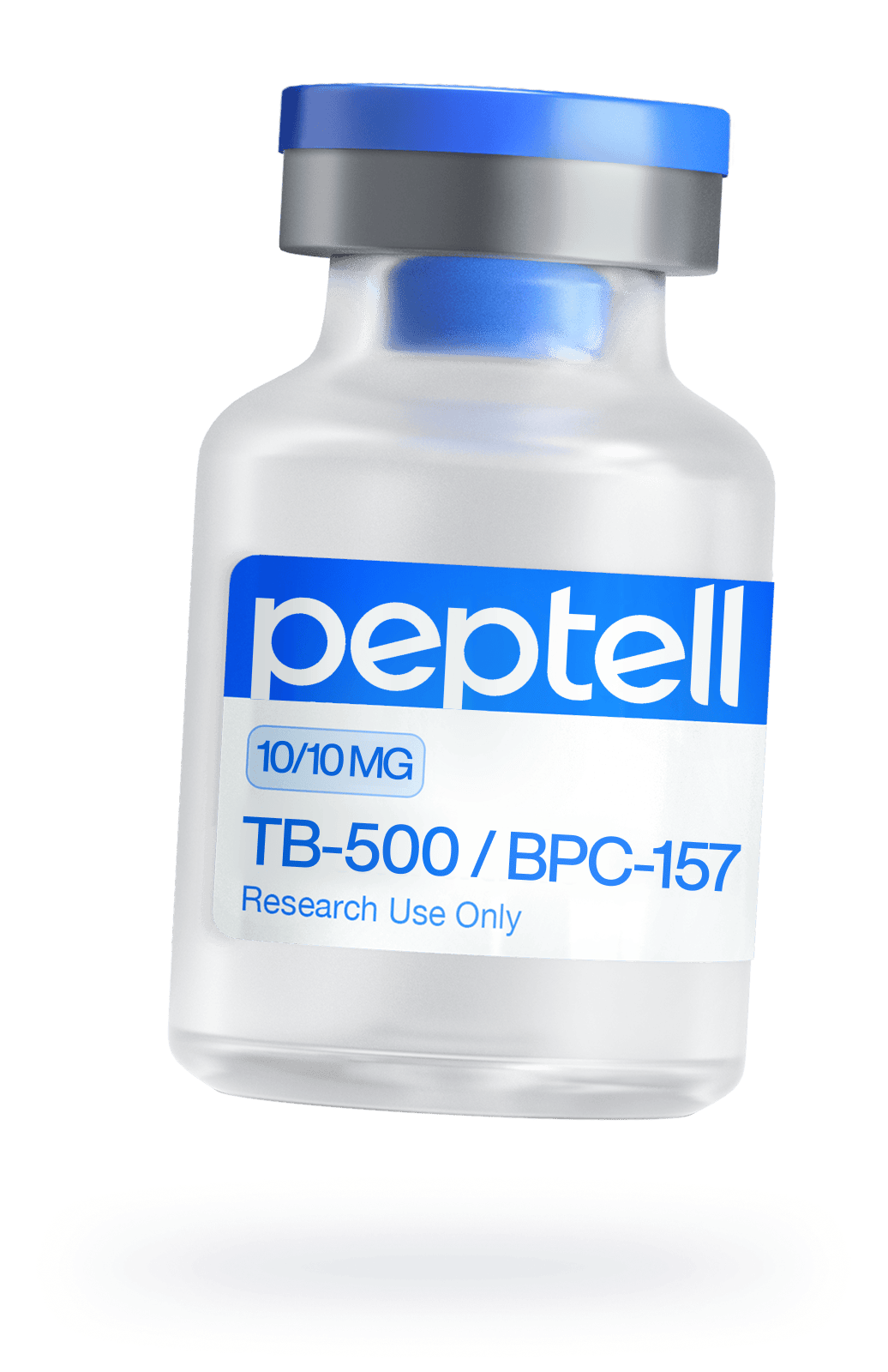
Analytical guidance asks that the identification and quantitation of an analyte not be affected by other substances present, including other components [16]. In a vial that holds both peptides, that means one identity result and one content result per peptide, not a single figure for the mixture. The differences in the table make that practical: the masses are far apart, and the UV responses are not interchangeable, so each component has to be measured against its own reference. Verifying a peptide blend sets out what a blend certificate should show.
The TB-500 / BPC-157 blend follows the same release rule as the single peptides. Every lot is held in quarantine until an accredited lab reports purity (HPLC) and identity (mass spectrometry), and each product page, including those for BPC-157 and TB-500, has a View COA button with the certificate of analysis for the lot we ship.
Two separate literatures
The research records differ as much as the molecules. A PubMed search of titles and abstracts on 3 November 2026 found the following [17]:
| Search | Records |
|---|---|
| BPC-157, three spellings | 230 |
| TB-500 or TB500 | 35 |
| Thymosin beta-4, two spellings | 1,136 |
| BPC-157 together with TB-500 or thymosin beta-4 | 14 |
Of the 14 records that mention both, 13 were published in 2026, and 8 are indexed as reviews [17]. The pairing is recent and mostly a feature of review articles. Each peptide's own literature has a shape worth knowing before citing it: most BPC-157 papers come from one research group, as BPC-157: sequence, origin and research describes, and much of what is cited for TB-500 was done with full-length thymosin beta-4, with which the fragment is often conflated [1].
Sources
- Tham A et al. J Am Acad Orthop Surg (2026). PubMed
- Sikiric P et al. Curr Pharm Des (2011). PubMed
- Esposito S et al. Drug Test Anal (2012). PubMed
- PubChem. BPC-157, CID 9941957. PubChem
- PubChem. TB-500, CID 62707662. PubChem
- Sikora K et al. Pharmaceuticals (Basel) (2020). PubMed
- Chang CH et al. J Appl Physiol (1985) (2011). PubMed
- Sosne G et al. FASEB J (2010). PubMed
- UniProt. P62328, thymosin beta-4 (TMSB4X). UniProt
- Li S et al. Biotechnol Bioeng (1995). PubMed
- Behrendt R et al. J Pept Sci (2016). PubMed
- Geiger T et al. J Biol Chem (1987). PubMed
- Kuipers BJ et al. J Agric Food Chem (2007). PubMed
- Rahaman KA et al. J Chromatogr B Analyt Technol Biomed Life Sci (2024). PubMed
- PubChem. Fequesetide (LKKTETQ), CID 10169788. PubChem
- ICH Q2(R2), Validation of Analytical Procedures (final version, adopted 1 November 2023). ICH
- PubMed searches run 3 November 2026: "BPC 157"[tiab] OR "BPC-157"[tiab] OR "BPC157"[tiab] (230 records); "TB-500"[tiab] OR "TB500"[tiab] (35); "thymosin beta 4"[tiab] OR "thymosin beta4"[tiab] (1,136); the BPC-157 terms AND the TB-500 or thymosin beta-4 terms (14, of which 8 reviews). PubMed